Energy savings at home
Lower your energy bills at home – and lower your carbon emissions too
In the UK our homes are responsible for 20% of all carbon emissions and heating them is more expensive every year. There are a few obvious first steps to improve on this:
Install a smart meter - Monitor your energy use in real time. See what appliances are using most and adopt energy efficiency measures to save money on energy bills and offset price increases.
Buy energy efficient kit - Electrical appliances are becoming more efficient by the year. Whether it’s buying energy-saving light bulbs or choosing appliances with a high energy star rating, you can make your home more eco-friendly and save money.
Better home insulation - Add extra insulation to your loft and walls so your home retains more heat during the winter and stays cool in summer. Install double glazing everywhere. Check out these Home insulation options.
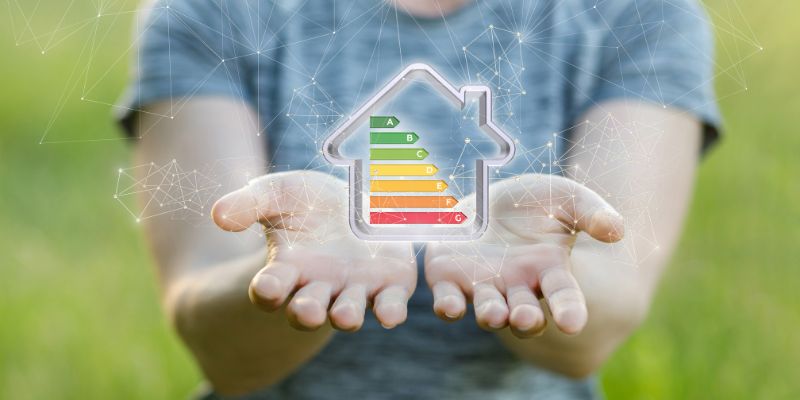
Want to know your home energy performance score? You can check on the Government website. How does it compare to others locally?
If you’ve got all the above in place, you might want to consider investing in some more serious money saving actions:
Add battery storage - A battery storage system allows you to capture heat or electricity when it’s readily available, typically from a renewable energy system, but also from the main grid by charging during lower off-peak rates, reducing your electricity bills.
Battery storage options have improved dramatically, with better products and lower prices. Battery size and cost depends on current energy use and the size of any generation technologies you have installed. You may also want to plan around future electricity use in case you buy an electric vehicle (EV) or plan to install a heat pump.
Install solar panels - Solar (Photovoltaic PV) panels are the most popular renewable energy resource; and the cost of solar PV panels is at an all-time low. They take energy from the sum and generate DC power; an inverter changes the DC electricity to alternating current (AC) for use in the home. Any excess energy generated can either be sold back to the grid or stored for night-time use.
Using PV panels alone lowers electricity bills and reduces reliance on the grid, but combining them with cutting-edge battery storage means you can store excess energy for use during the day and night, as well as taking advantage of off-peak charging rates when the sun refuses to play ball.
Switch to a Heat Pump
A great local example is the seven new houses built at Snower Hill, Betchworth. Rather than installing traditional boilers, their occupants are kept toasty warm by heat pumps, which typically deliver three to four units of heat for every unit of electricity consumed. With over 30 million already installed across Europe, heat pumps are hardly a new technology.
How does it work? Think of the pump as an inside out refrigerator. The system collects heat from the atmosphere and transfers it to a liquid, compressing and increasing the liquid temperature as it does so. It then transfers that heat to the water which circulates and heats rooms in your home via your radiators or underfloor heating, just as it would from a boiler.
Heat pumps can also be used to heat water stored in a cylinder, providing hot water for your showers, baths and hot taps.
Air Source heat pumps are the most popular domestic heat pump in the UK, with literally tens of thousands of installations monthly. They are a good solution for many types of property where there is outside space for the unit.
As the name implies, Ground Source heat pumps extract low-temperature solar energy stored in the ground or water using buried pipework and compresses this energy into a higher temperature. They work very well, winter or summer, as the ground temperature is remarkably stable one metre or so below the surface.
Other renewable Energy systems - The Energy Saving Trust offers a useful starting point for researching the right one for you, your home and your lifestyle.
Pulling it all together - To significantly reduce running costs and improve household energy resilience, consider a combination of technologies. The greatest benefits come from intelligently integrated smarter heating, affordable electricity supply, and energy storage.
This joined-up approach allows you to take far greater control of your energy use, reduce exposure to fluctuating energy prices, and creates a more predictable and manageable cost structure. Importantly, solar is not essential for this model - many households are now achieving substantial savings through battery storage and smart tariff use alone.
Re-Betchworth is grateful to the Surrey Energy Centre for their help with the information above. More detail is available on the SEC website